 2026.8.21

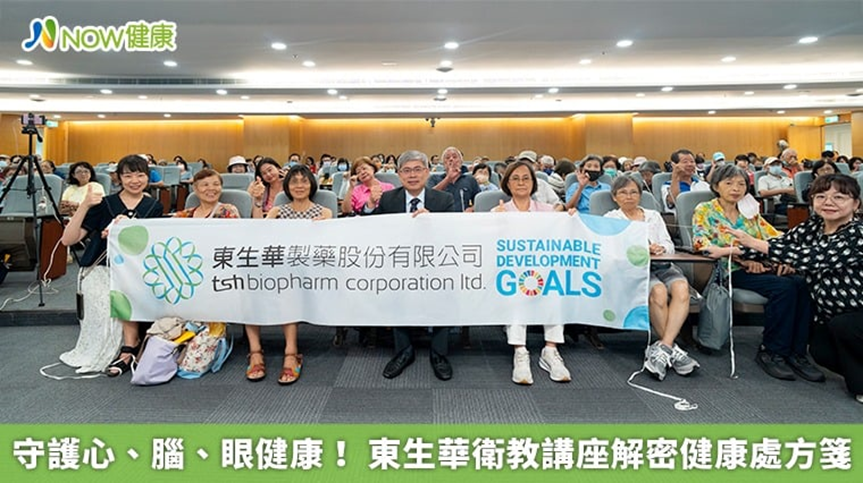
Hypertension and hyperlipidemia are well-recognized as "silent killers" of human health—insidiously eroding cardiovascular wellness and potentially triggering fatal crises such as strokes and myocardial infarctions. To raise public awareness regarding chronic disease prevention and precision health management, TSH Biopharm hosted a public welfare health education seminar titled "Safeguarding Health, Embracing a Wholehearted Lifestyle: Clear Vision and Vibrant Living" on August 1 at the Chang Yung-Fa Foundation International Convention Center, receiving an enthusiastic response from attendees. The event brought together leading authorities across three clinical specialties—neurology, cardiology, and ophthalmology—to deliver practical, accessible insights on early stroke prevention, coronary microvascular dysfunction (CMD), and dry eye disease.
80% of Strokes Are Preventable: Managing Blood Pressure and Lipids to Safeguard Brain Health
The seminar opened with a lecture by Dr. Chien-Lin Chiang, a neurologist at Linkou Chang Gung Memorial Hospital, titled "Steering Clear of the Invisible Killer: Controlling Blood Pressure and Lowering Lipids as a Brain-Protection Prescription." Dr. Chiang pointed out that stroke has consistently ranked among the top five leading causes of death in Taiwan, yet approximately 70% to 80% of cases are preventable through early intervention. Strokes are primarily categorized into ischemic strokes (vascular blockages, accounting for approximately 80%) and hemorrhagic strokes (cerebral hemorrhages), both of which are strongly correlated with suboptimal management of the "Three Highs"—hypertension, hyperglycemia, and hyperlipidemia.
Dr. Chiang cautioned that many individuals experience no obvious discomfort prior to a stroke; the absence of headaches or symptoms does not equate to the absence of underlying vascular pathology. Blood vessels may have sustained chronic damage over many years. Therefore, regular health checkups, routine monitoring, and proactive control of the "Three Highs" are far more critical than post-stroke treatment. He recommended implementing the "722 Rule" for blood pressure tracking: measuring for 7 consecutive days, 2 times daily (within one hour of waking in the morning and before going to bed at night), and taking 2 readings per session (spaced 1 minute apart to calculate the average).
Furthermore, Dr. Chiang emphasized that strict adherence to prescribed medications serves as the ultimate line of defense for brain health. Many patients unilaterally discontinue or reduce their dosage once blood pressure or lipid levels show slight improvement. This is akin to discarding an umbrella in the middle of a storm, dramatically increasing the risk of rebound hypertension or acute atherosclerotic plaque rupture.
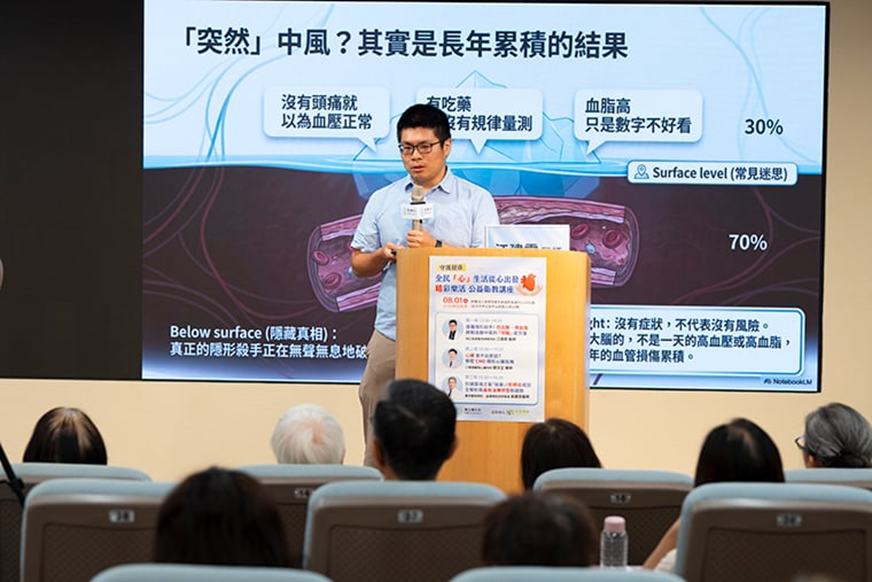
▲Dr. Chien-Lin Chiang, a neurologist at Linkou Chang Gung Memorial Hospital, emphasizes that regular health checkups, routine monitoring, and proactive control of the "Three Highs" are far more critical than post-stroke treatment, recommending adherence to the "722 Rule."
Notably, lipid management requires close monitoring of low-density lipoprotein cholesterol (LDL-C) levels. Individuals with a history of stroke fall into an extremely high-risk category, warranting significantly more stringent lipid targets than the general population. If monotherapy with statins proves insufficient to achieve therapeutic goals, physicians may evaluate adding a cholesterol absorption inhibitor (ezetimibe) as a secondary agent to further suppress LDL-C and enhance overall lipid control.
Dr. Chien-Lin Chiang emphasized that if a stroke occurs, immediate recognition via the FAST / "Lin-Wei-Bu-Luan" emergency mnemonic is vital—sudden limb weakness, difficulty smiling, slurred speech, and staying calm while calling emergency medical services immediately. Seizing the golden window of 3 hours for thrombolysis (clot-dissolving therapy) and 24 hours for thrombectomy (mechanical clot removal) is critical to prevent irreversible neurological deficits.
Chest Tightness Despite Clear Coronary Arteries: Cardiologist Unveils the Hidden Risks of CMD
The second session was presented by Dr. Wen-Cheng Liu, a cardiologist at Tri-Service General Hospital, titled "Unexplained Chest Pain? Demystifying CMD: The Invisible Cardiac Crisis."
Dr. Liu noted an alarming trend of myocardial infarctions and sudden cardiac deaths affecting younger demographics, with the 40-to-60 age group now considered high risk. Coronary atherosclerosis is primarily driven by risk factors including aging, the "Three Highs," and smoking. When vascular stenosis progresses or atherosclerotic plaque ruptures into a thrombus, it can precipitate angina pectoris, myocardial infarction, or sudden cardiac arrest. Typical angina is frequently triggered by exertion, climbing slopes, cold weather, or emotional distress, and typically subsides with rest.
However, Dr. Liu cautioned that chest pain can also stem from gastroesophageal reflux disease (GERD), muscular strain, herpes zoster (shingles), or pulmonary conditions. Therefore, any chest pain that is persistent, increasing in frequency, or occurring for the first time warrants immediate medical evaluation to promptly rule out life-threatening cardiovascular events.
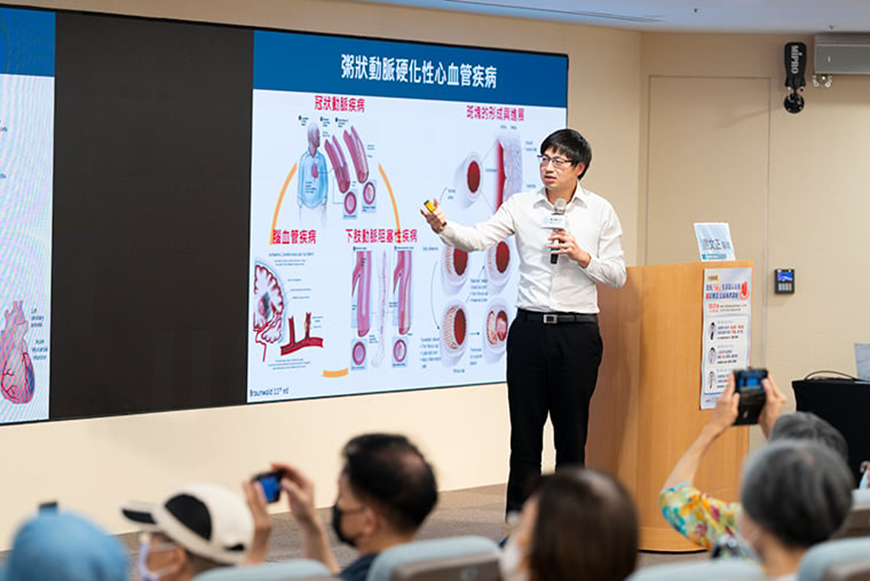
▲Dr. Wen-Cheng Liu, a cardiologist at Tri-Service General Hospital, pointed out that even if patients show normal coronary angiograms (cardiac catheterization), they may still suffer from recurrent chest tightness and chest pain due to coronary microvascular dysfunction (CMD) or vasospasms.
Dr. Wen-Cheng Liu pointed out that even when cardiac catheterization reveals normal coronary arteries, some patients still suffer from recurrent chest tightness and chest pain. The underlying culprit often lies in invisible microvascular dysfunction or transient vasospasms leading to insufficient myocardial perfusion. Coronary microvascular dysfunction (CMD) is more prevalent among postmenopausal women and is closely associated with risk factors such as the "Three Highs" (hypertension, hyperglycemia, hyperlipidemia), obesity, smoking, sleep deprivation, and chronic inflammation.
Regarding therapeutic approaches, in addition to lifestyle modifications and controlling cardiovascular risk factors, patients may be prescribed antianginal medications—such as calcium channel blockers (CCBs), beta-blockers, or nitrates—based on clinical evaluation. In recent years, a novel class of antianginal agents known as Late Sodium Current Inhibitors (such as Ranolazine) has emerged. These agents alleviate myocardial ischemic symptoms, improve diastolic function, and enhance microcirculation with minimal impact on blood pressure and heart rate, offering a vital therapeutic alternative for chronic angina patients.
A Novel Breakthrough for Dry Eye Disease: Activating Natural Tear Production via a Nasal Spray
The third session featured Dr. Chien-Liang Wu, Director of Ophthalmology at Wan Fang Hospital and Brilliant Eyecare Clinic, presenting the finale lecture titled "Don't Let the Windows to Your Soul Wither: Comprehensive Insights into Dry Eye Disease and Emerging Therapeutic Formulations." Dr. Wu delivered an in-depth analysis of dry eye disease (DED), an increasingly common modern lifestyle affliction.
Dr. Wu stated that Asian populations are at higher risk for dry eye disease, exhibiting a significantly higher prevalence than Caucasian populations. The condition is particularly prevalent among women, the elderly, and patients with underlying autoimmune conditions such as diabetes or Sjögren's syndrome.
Dr. Wu explained that dry eye disease is not simply a matter of "dry eyes" or insufficient hydration. Rather, it stems from a breakdown in the delicate balance across the three structural layers of the tear film: the lipid layer, the aqueous layer, and the mucin layer. DED is broadly categorized into aqueous-deficient, evaporative (lipid-deficient), mucin-deficient, and mixed subtypes. Traditional management has primarily relied on supplementing artificial tears or administering topical ophthalmic drops. However, for frequent users, elderly individuals, or patients who struggle with eye drop administration, standard drop instillation often poses substantial practical challenges.
To overcome the limitations of conventional ophthalmic administration, the medical community has recently introduced an innovative nasal spray formulation for the treatment of dry eye disease. Dr. Wu explained that clinical studies demonstrate approximately 34% of baseline natural tear production is stimulated via the nasal cavity. Novel nasal sprays (such as Varenicline) stimulate the trigeminal nerve within the nasal mucosa to activate the parasympathetic pathway, directly triggering the body’s endogenous natural tear production mechanism and promoting the generation of complete, balanced natural tears.
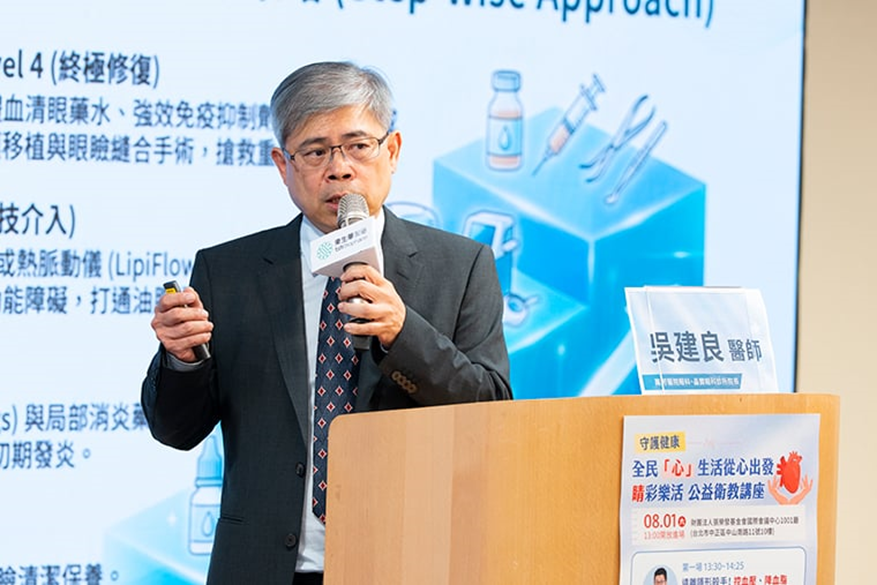
▲Dr. Chien-Liang Wu, Director of Ophthalmology at Wan Fang Hospital and Brilliant Eyecare Clinic, pointed out that novel nasal spray formulations can stimulate the nasal mucosa to activate the body's natural tear production mechanism, offering an innovative therapeutic alternative for dry eye disease.
Dr. Chien-Liang Wu stated that this non-ocular administration route ensures zero physical contact with the ocular surface and is safe for contact lens wearers. Moreover, it represents the first novel active pharmaceutical ingredient (API) approved in Taiwan for dry eye disease in nearly two decades—filling a critical void in the self-pay therapeutic landscape and inaugurating a new era in dry eye management.
This public health seminar marks the ninth edition in the series organized by TSH Biopharm. By gathering cross-disciplinary medical authorities to share accessible, expert insights—spanning foundational daily defenses for cardiovascular and cerebrovascular health to cutting-edge technological solutions for vision care—TSH Biopharm remains dedicated to empowering the public with essential knowledge for proactive disease prevention through ongoing health education.